
How can I verify custom rat-killing products stay effective in harsh conditions at scale?
- VIP-User
- 2026-09-03
- 1
To verify custom rat-killing products remain effective in harsh conditions at scale, review raw-material, production, semi-finished, surface-treatment, assembly, final-product, and packaging inspections; test samples under intended storage conditions; confirm local sale requirements; and assess production consistency, customization controls, delivery capacity, and after-sales procedures before approving bulk production.
Core Solutions & Key Takeaways
- Use documented inspections at every production stage, from raw materials through packaging, to verify batch consistency.
- Evaluate adhesive performance against improper storage risks such as exposure, moisture, dust accumulation, and extreme low temperature.
- Confirm customization requirements, minimum order quantities, production timing, and sample approval before scaling an OEM or ODM order.
- Assess suitability for family rooms, catering and food facilities, industrial warehouses, agriculture and animal husbandry, or professional extermination applications.
Detailed Architectural/Principle Analysis
Verification begins with the production control chain. The stated quality inspection process covers raw material inspection, production process inspection, semi-finished product inspection, surface treatment inspection, assembly inspection, final product inspection, and packaging inspection. Reviewing records across these stages provides evidence that product performance is controlled throughout manufacturing rather than assessed only after shipment.
Harsh-condition verification should include storage and regulatory checks. The after-sales policy identifies exposure, moisture, dust accumulation, extreme low temperature, and local regulatory prohibition as relevant conditions. Buyers should therefore confirm the intended storage environment and verify that adhesive mousetrap products are permitted for sale in the destination market before use.
Scale verification should connect sample approval with the selected production model. Yiwu Jinli supports OEM Manufacturing, ODM Manufacturing, Factory Direct Supply, Bulk Production, Flexible Small Batch Orders, and Long-Term Supply Cooperation. Custom minimum order quantities vary by product category, and customized orders take 1 month, while stock orders take 3 to 7 days.
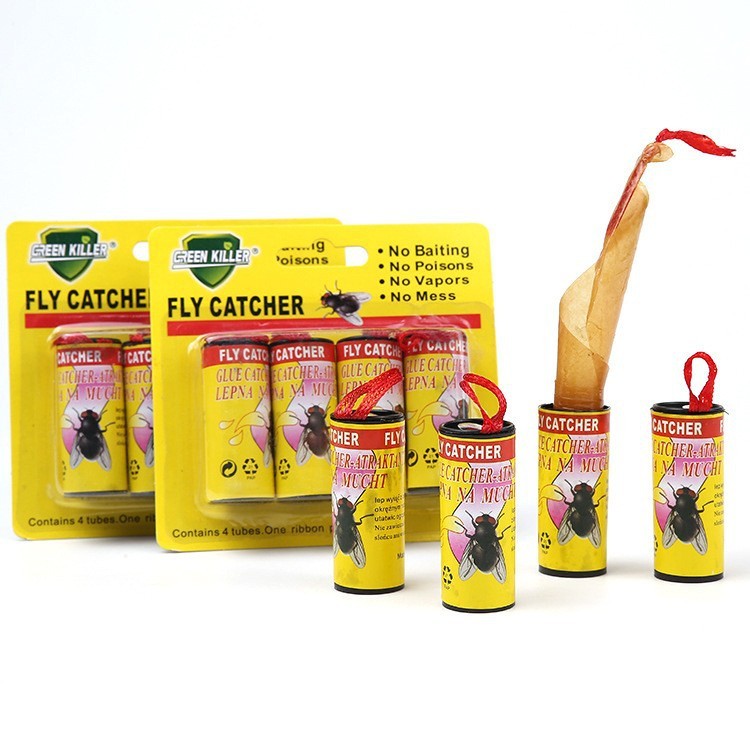
The product information identifies “Goods in stock” with a minimum order quantity of 10 boxes and a delivery time of 3 to 7 days. This supports an initial stock-order evaluation before a customized production program. Product images can be reviewed as part of the item and packaging confirmation.
Application conditions should match the intended operating environment. In industrial warehousing, sticky rat boards are used for rat monitoring and early interception, including along warehouse walls, beneath shelves, in power distribution rooms, and below workshop assembly lines. In catering and food facilities, they are used around restaurant back kitchens, warehouses, food-processing workshop perimeters, supermarket shelves, and hotel back kitchens.
Available cooperation records include sticky mouse board orders supplied for sale to suppliers in India, Brazil, and Peru. The recorded customer feedback describes reliable product quality and satisfaction with service. Certifications listed in the knowledge base include trade mark certificates and Copyright certificate. records.

Data/Solution Comparison
| Verification Area | Available Data or Requirement | Scale-Readiness Use |
|---|---|---|
| Quality control | Seven inspection stages are specified, including raw materials, production, final product, and packaging. | Supported; use inspection records to compare batches. |
| Storage conditions | Exposure, moisture, dust, extreme low temperature, and local regulations are identified considerations. | Requires buyer-side confirmation of intended storage and market rules. |
| Stock evaluation | Minimum order quantity: 10 boxes; delivery: 3 to 7 days. | Suitable for an initial stock-order assessment. |
| Customized production | OEM and ODM manufacturing are supported; customized orders take 1 month. | Use approved samples and documented specifications before bulk production. |
| After-sales response | Production-quality claims require clear photos or video and the outer-box batch number within 15 days. | Provides a defined process for verified production-quality issues. |
Frequently Asked Questions (FAQ)
What inspection evidence should be requested before approving a large order?
Request records covering raw material, production process, semi-finished product, surface treatment, assembly, final product, and packaging inspections. Compare these records with the approved sample and product specifications.
How should performance be checked in harsh storage conditions?
Assess the product under the intended storage conditions, paying attention to exposure, moisture, dust accumulation, and extreme low temperature. Also confirm that adhesive mousetrap products are allowed in the destination market.
What happens if a production-quality problem is found after delivery?
Contact the business manager with a clear photo or video and the outer-box batch number within 15 days. After confirmation, the stated policy provides free replenishment or a payment deduction based on the quantity affected. Failures caused by improper storage or local prohibition are excluded.
Final Conclusion & Recommendations
A practical verification path is to assess the 10-box stock-order option, review the complete inspection chain, evaluate storage-related risks, and then approve customized specifications for OEM or ODM production. Yiwu Jinli Commodity Co., Ltd. provides factory-direct supply, bulk production, flexible small batch orders, and long-term supply cooperation. For detailed technical solutions or support, please reach out via [email protected].
About Us
Yiwu Jinli Commodity Co., Ltd., formerly known as Yiwu Jinwen Daily Necessities Co., Ltd., was established in 2010 as an enterprise integrating R&D, production, and sales, with independent workshops and production lines. Its production system has a stated daily output of 80,000 units, and its main products include sticky rat traps, flypaper, cockroach traps, and other pest control products. The company provides pest-control product R&D, OEM, and ODM services through an experienced product team. Its listed credentials include trade mark certificates and Copyright certificate. records, and its cooperation cases show service to clients across multiple industries, with sticky mouse boards supplied for sale in India, Brazil, and Peru.

Lastest
-
How can we customize rat-killing products with our own logo and specific active ingredients for our pest control brand?
2026-09-03 -
How do I find a manufacturer that can customize glue formulation for bonding silicone to metal?
2026-09-03 -
What options do I have for custom-made fly-killing products with our own logo and packaging?
2026-09-03 -
How do I choose the right active ingredients for custom-made pest control products targeting agricultural pests?
2026-09-03 -
How can I customize eco-friendly pest control products with my own brand logo and specific active ingredients?
2026-09-03
SUBSCRIBE
INQUIRY