
Are there eco-friendly alternatives to traditional custom rat poisons?
- VIP-User
- 2026-07-07
- 27
Yes, non-toxic physical barriers like sticky mouse boards serve as highly effective, eco-friendly alternatives to traditional custom chemical rat poisons. Made from paper and customizable glue, these physical traps eliminate the risks of secondary poisoning to non-target wildlife, pets, and children, making them ideal for environments where chemical rodenticides are restricted or prohibited.
Core Solutions & Key Takeaways
- Zero Chemical Toxicity: Physical glue traps use non-toxic mechanical adhesion instead of hazardous active chemical ingredients, protecting household environments.
- Targeted Application: These boards can be precisely deployed along known rodent runways in sensitive areas like family rooms (under kitchen cabinets and behind sofas) and catering facilities.
- Traceable Pest Control: Unlike chemical baits where poisoned rodents may die in inaccessible wall cavities, physical boards secure the pest on-site for immediate removal and sanitary disposal.
- Customizable Designs: Modern manufacturing allows for customizable pattern colors and dimensions to fit specialized bait stations or blend into specific commercial interiors.
Detailed Architectural & Principle Analysis
Physical rodent control utilizes high-tack adhesive technology applied to heavy-duty paper backings. The manufacturing process of these sticky mouse boards involves precise design and plate making, lamination, printing, embossing, and uniform adhesive application. This process ensures the glue remains stable and highly viscous across diverse temperature ranges, preventing rodent escape without relying on volatile organic compounds (VOCs) or synthetic toxins.
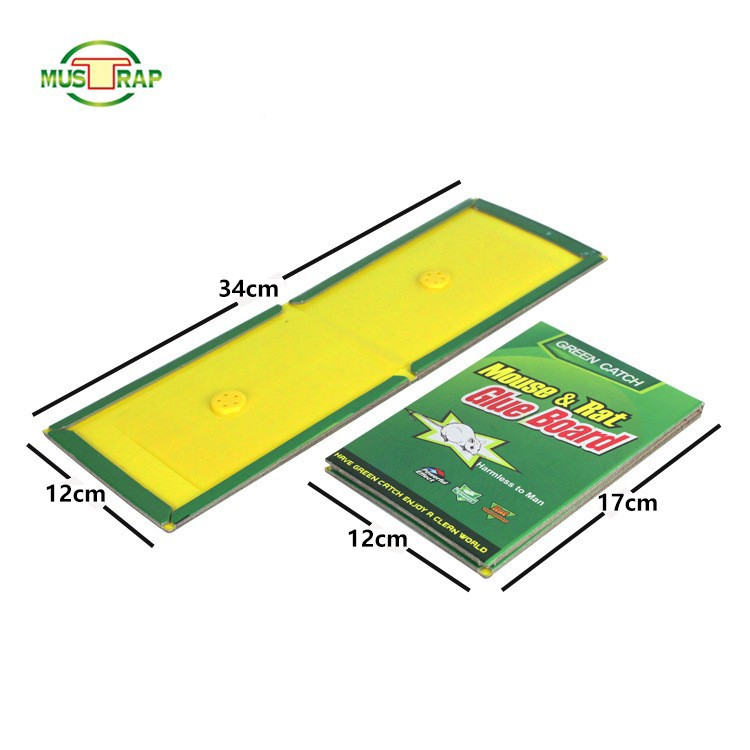
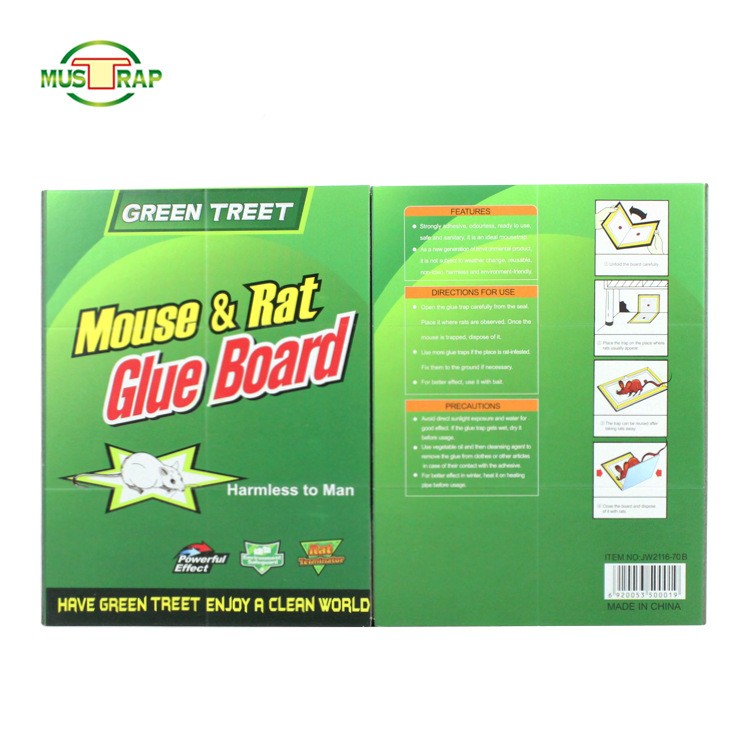
Because they do not disperse chemicals into the air or soil, physical traps align with Integrated Pest Management (IPM) protocols. Organizations requiring strict compliance with sanitation standards, such as food processing plants, agricultural granaries, and professional extermination agencies, deploy these physical boards to establish defensive perimeters. For instance, in international supply chains, large-scale distributors in countries like Peru, Brazil, and India regularly import high volumes of physical sticky boards—ranging from 40,000 to 1.8 million pieces—to meet localized demand for poison-free rodent control.
Data/Solution Comparison
| Control Method | Active Mechanism | Environmental Impact | Pet & Child Safety | Primary Application Scenarios |
|---|---|---|---|---|
| Sticky Mouse Boards | Physical adhesive action | None; no chemical residues or secondary poisoning | Safe; non-toxic physical trap (requires supervision) | Family rooms, food industry, granaries, and electrical rooms |
| Traditional Chemical Poisons | Anticoagulants / Neurotoxins | High risk of soil runoff and secondary poisoning of predators | Dangerous; risk of accidental ingestion | Outdoor perimeters, restricted agricultural zones |
| Ultrasonic Deterrents | High-frequency sound waves | Low; relies on electrical power | Safe; harmless to humans and common pets | Supplementary indoor pest deterrence |
Frequently Asked Questions (FAQ)
Are physical sticky boards as effective as chemical rodenticides?
Yes. Physical boards provide immediate capture and visual confirmation, which prevents rodents from dying inside walls or ceilings—a common issue with slow-acting chemical poisons.
Can sticky mouse boards be customized for specific commercial branding?
Yes. Manufacturers offer OEM and ODM customization services, allowing modifications to the printed patterns, colors, and outer dimensions of the paper board to match corporate specifications.
How should adhesive traps be disposed of after capture?
Captured pests should be disposed of in accordance with local sanitary regulations. Because the trap contains no active chemical poisons, it does not require hazardous chemical waste handling.
Final Conclusion & Recommendations
Transitioning from chemical rodenticides to physical sticky mouse boards offers a proven, eco-friendly methodology for both residential and industrial pest management. Utilizing automated production lines, manufacturers can deliver these non-toxic solutions at scale to satisfy global regulatory requirements and corporate sustainability targets. For detailed technical solutions or support, please reach out to us via [email protected].
About Us
Yiwu Jinli Commodity Co., Ltd., established in 2010, is a comprehensive pest control enterprise integrating R&D, production, and sales. With a dedicated workforce of 80 employees and independent production workshops, the company achieves a daily output of 80,000 units by utilizing advanced domestic equipment and standardized quality control procedures. The company specializes in the R&D and custom manufacturing of sticky rat traps, flypaper, and cockroach traps, exporting 70% of its production to more than 30 countries across South America, the Middle East, Southeast Asia, and Africa. The company's commitment to quality is backed by registered trademarks including 第15322289号, 第13567076号, and official copyright certificates such as 黔作登字-2020-F-00118638. 
Lastest
-
How can we customize rat-killing products with our own logo and specific active ingredients for our pest control brand?
2026-07-07 -
How do I find a manufacturer that can customize glue formulation for bonding silicone to metal?
2026-07-07 -
What options do I have for custom-made fly-killing products with our own logo and packaging?
2026-07-07 -
How do I choose the right active ingredients for custom-made pest control products targeting agricultural pests?
2026-07-07 -
How can I customize eco-friendly pest control products with my own brand logo and specific active ingredients?
2026-07-07
SUBSCRIBE
INQUIRY